How heavy the wine feels
Body
Think skim milk, whole milk, then cream. Alcohol, grape concentration, sugar, and winemaking all affect weight.
Wine 101
You do not need a perfect vocabulary. Learn how structure feels, then use familiar flavors to describe what you notice.
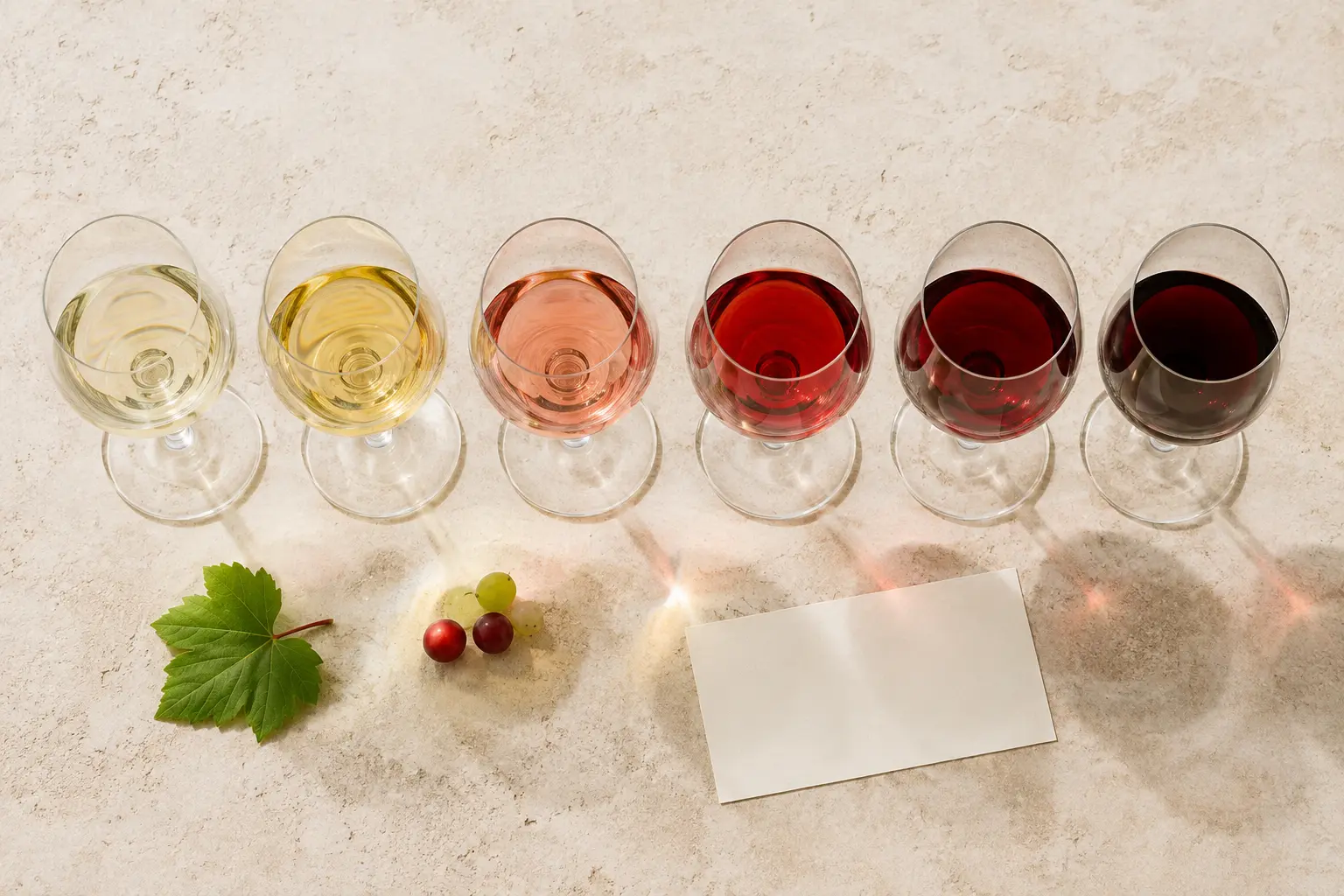
How heavy the wine feels
Think skim milk, whole milk, then cream. Alcohol, grape concentration, sugar, and winemaking all affect weight.
The fresh, mouthwatering quality
Acidity makes you salivate, much like lemon. It keeps wine lively and is one reason wine works so well with food.
The drying grip in many reds
Tannin comes mainly from grape skins, seeds, stems, and oak. It feels like strong black tea and softens with food and age.
From bone-dry to dessert-rich
Sweetness is leftover grape sugar. Fruit aromas can make a dry wine seem sweet, so notice the finish rather than the smell alone.
Taste in four steps
Read the label
New World labels often lead with the grape. Many European labels lead with a protected place whose rules imply grapes and methods. The vintage is the harvest year—not the bottling year.
Alcohol level can offer a style clue: higher numbers often suggest riper fruit and more body, though balance matters more than the number itself.
Serving
Serve sparkling and light whites cold, fuller whites lightly chilled, and reds slightly below modern room temperature. If a wine is too cold, aroma disappears; if too warm, alcohol can dominate.
A refrigerator cools a bottle gradually. An ice bucket with water works faster because the full surface is in contact with cold liquid.
Storage
Store bottles away from heat, sunlight, vibration, and big temperature swings. A cool interior closet is better than the top of a refrigerator. Cork-sealed bottles intended for longer storage are traditionally kept on their side.
After opening, re-cork and refrigerate. Most still wines remain pleasant for roughly two to five days, depending on style and how much air is left in the bottle.